

Editorial Board, ATLAS Publication Committee
Appointed as an Editorial Board member, contributing to the official review process that safeguards the scientific quality and integrity of ATLAS publications.
I am an experimental particle physicist and a NAWA ULAM Fellow at the Faculty of Physics and Applied Computer Science, AGH University of Krakow, working with the ATLAS experiment at the Large Hadron Collider (LHC) at CERN, the European Organization for Nuclear Research.
 Jet Substructure Analysis
 Top-Quark Physics
 Flavour Tagging Calibration
 Heavy-Ion Collisions
 Precision Measurements
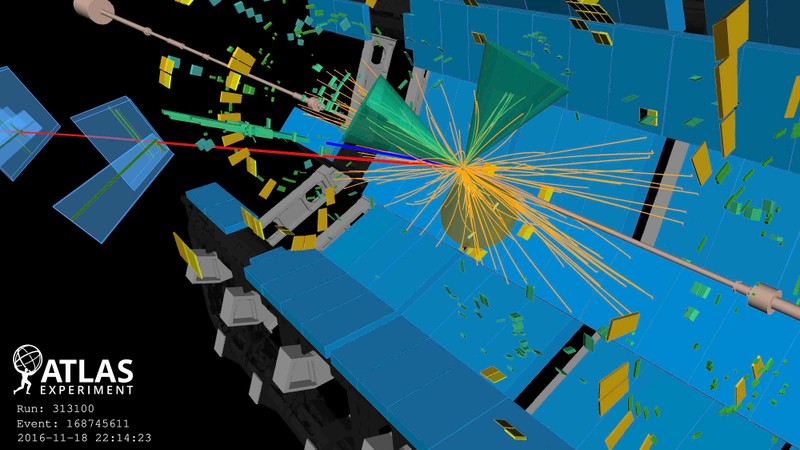
Produced an outreach video to promote ATLAS's results on top-quark production in heavy-ion collisions, aimed at a broader audience.

September 2026 – Present · Kraków (PL)
I hold an independent research fellowship of the Polish National Agency for Academic Exchange (NAWA ULAM programme), under which I lead my own research programme within the ATLAS Collaboration.
Research programme
A measurement of
Integration of the GN2 flavour-tagging algorithm into the ATLAS heavy-ion reconstruction environment, enabling b-jet identification under high-multiplicity conditions.
Measurement of jet fragmentation in events where a
Leadership & service
ATLAS Publication Committee · scientific review of collaboration papers before submission
ATLAS Top Physics Group · group data storage on the Worldwide LHC Computing Grid

September 2025 – August 2026 · Prague (CZ)
Postdoctoral research within the ATLAS Collaboration on jet physics across collision systems and on top-quark production in heavy-ion collisions.
Research
Studies of jet properties and substructure in
Continuation of the heavy-ion top-quark programme following the first observation, towards using the top quark as a probe of the quark–gluon plasma.
Leadership, service & mentoring
Team member · quark and gluon radiation in the quark–gluon plasma
Guidance on data analysis and research projects
Run 3 flavour-tagging performance in ATLAS heavy-ion reconstruction with graph neural networks
ATLAS Control Room, Point 1 · live detector operations during data-taking
October 2024 – September 2025 · Prague (CZ)
Postdoctoral research centred on top-quark production as a probe of nuclear matter, culminating in the first observation of top-quark pairs in lead–lead collisions.
Key result
The first observation of top-quark pair production in any nucleus–nucleus collision system, with a significance of 5.0σ, using 1.9 nb−1 of Pb+Pb data at
Phys. Rev. Lett. 134, 142301Editors’ SuggestionFeatured in Nature.com & Physics World
Leadership & service
CTU Prague · coordination of the institute’s heavy-ion physics programme
ATLAS b-Jet/ID/MinBias trigger signatures · live data-taking support
Flavour-tagging performance checks across ATLAS software releases
Public lectures, student workshops and science-communication campaigns

September 2017 – October 2024 · Prague (CZ)
Doctoral research within the ATLAS Collaboration on top-quark and Higgs-boson measurements in proton–proton and proton–lead collisions, covering the full analysis chain from statistical and simulation frameworks to publication. Ph.D. defended on 17 October 2024.
Key results
The first observation of top-quark pair production in proton–nucleus collisions, using 165 nb−1 at
JHEP 11 (2024) 101ICHEP 2024 talkDiffraction & Low-x 2024 talk
Main analyser of the two-same-sign-lepton plus hadronic-
Developed and maintained the pseudo-continuous b-tagging calibration framework for 139 fb−1 of
Leadership & service
ATLAS Tau Performance Working Group · liaison to the Top physics group
CTU Prague · institute review of ATLAS papers during collaboration-wide circulation
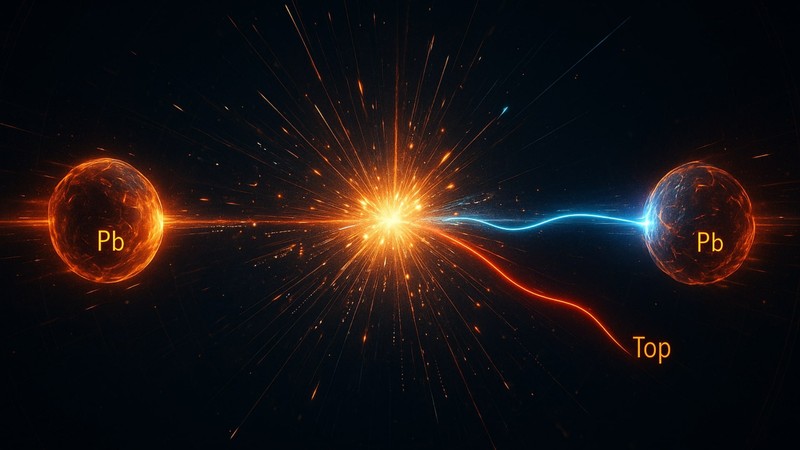
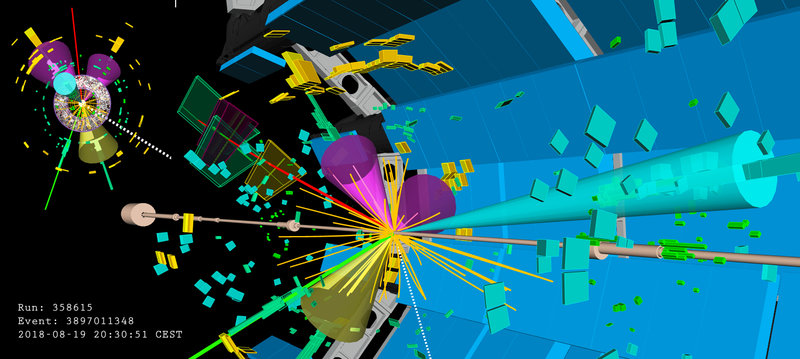
This ATLAS analysis achieved the first observation of top-quark pair (tt̄) production in Pb–Pb collisions, using 1.9 nb⁻¹ of Run-2 data. Top quarks, decaying before QGP formation, serve as unique probes of initial-state dynamics and high-Q² nPDFs. The analysis focused on the dilepton final state. A 5.0σ discovery-level significance was achieved, with a cross-section of 3.6 μb and 31% total uncertainty, in agreement with nPDF-based predictions. I optimised the signal region, implemented the profile-likelihood multi-fit analysis, extracted the signal strength for the cross-section measurement, and integrated theoretical inputs into the analysis. This result establishes the foundation for precision top-quark measurements in heavy-ion collisions. The results were featured on Phys.org, Nature.com, and IOP Physics World. Published as a Phys. Rev. Lett. Editors’ Suggestion, supported by the Czech Technical University in Prague.
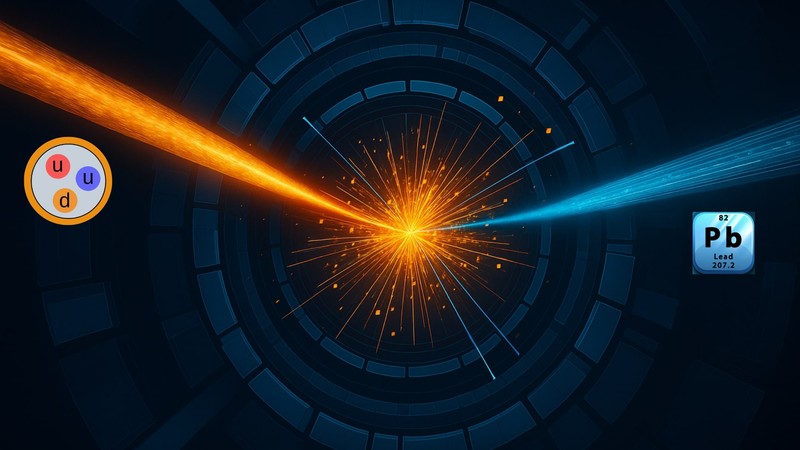
This ATLAS analysis achieved the first observation of top-quark pair (
Results were presented at ICHEP 2024 and Diffraction & Low-x 2024 and published in JHEP 11 (2024) 101, with support from the
Czech Technical University in Prague.
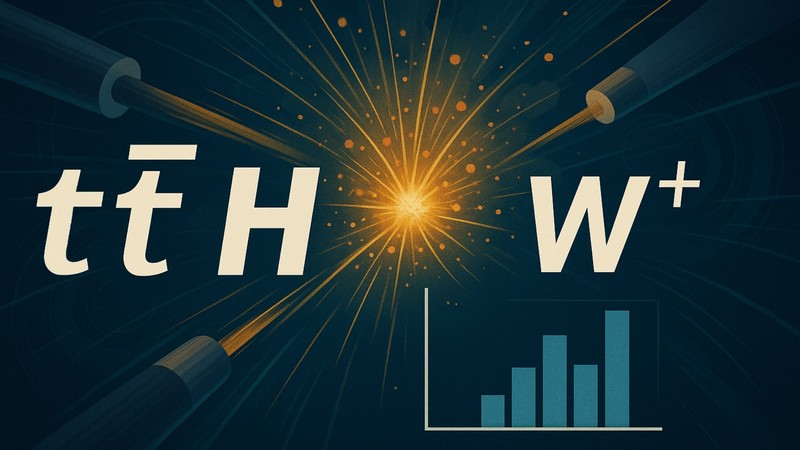
This ATLAS analysis measured
I optimised multivariate discriminants to isolate the
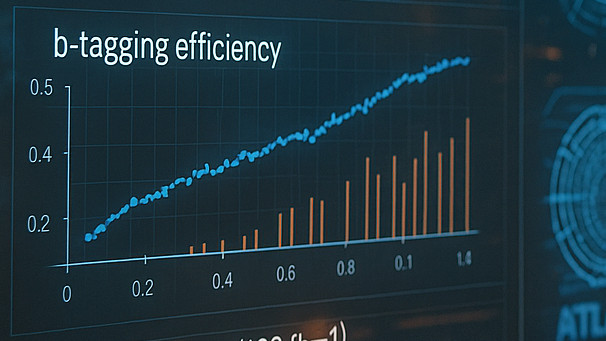
I developed and maintained the pseudo-continuous calibration framework for flavour tagging and b-jet identification in ATLAS simulations and data. Using the full Run 2 dataset (


Primordial soup was full of flavors
Read the articleTop-quark pairs at ATLAS could shed light on the early universe
Read the articleTop quarks spotted at mega-detector could reveal clues to early Universe
Read the articleATLAS observes top quarks in lead–lead collisions
Read the articleATLAS observes top quarks in lead–lead collisions
Read the articleGrants & fellowshipsHonours & degreesService to ATLAS
Appointed as an Editorial Board member, contributing to the official review process that safeguards the scientific quality and integrity of ATLAS publications.
Group contact for distributed computing: management of the group’s WLCG/Rucio disk quota, including replication policy, prioritisation of analysis requests and removal of obsolete samples.
Independent research fellowship, awarded as the sole recipient, hosted by the Faculty of Physics and Applied Computer Science, AGH University of Kraków (2026–2028). About the programme
Awarded to the ATLAS Collaboration, of which I am a member, jointly with the CMS, ALICE and LHCb Collaborations, recognising the co-authors of LHC Run 2 publications, including the detailed measurements of Higgs boson properties. Laureates
Team member of the project Study of quark and gluon radiation in the medium with the ATLAS detector at the LHC at Charles University, a programme supporting projects rated excellent by the European Research Council.
Advanced degree awarded on completion of a two-year postgraduate programme in Theoretical Physics at the Institute of Physics.
Fully funded scholarship to attend ESHEP 2024 in Peebles, Scotland, United Kingdom. School programme
Communicated calibration recommendations and uncertainty prescriptions to analyses and maintained the group’s recommendation pages.
Awarded in recognition of academic excellence and research contributions.
Institute reader and reviewer of ATLAS publications on behalf of the university.
Event: Diffraction and Low-x — Sicily, Italy
Event: ATLAS Week, 30th birthday — University of Lisbon, Lisbon, Portugal
Event: CZ+SK HEP Workshop — Palacký University in Olomouc, Czech Republic
Event: CZ+SK HEP Workshop — Comenius University, Bratislava, Slovakia
Event: New Vistas in Photon Physics in Heavy-Ion Collisions — Polish Academy of Sciences, AGH University of Science and Technology, Kraków, Poland
Event: ATLAS top workshop — Instituto de Física Corpuscular (IFIC), Valencia, Spain
Event: IEAP — CTU in Prague, Czech Republic
Event: DPG Conference Aachen — RWTH Aachen University, Aachen, Germany
Event: ESHEP - European School of High-Energy Physics — Peebles, Scotland
Event: 42nd International Conference on High Energy Physics (ICHEP) — Prague, Czech Republic
Event: 40th International Conference on High Energy Physics (ICHEP) — Virtual
Published: 15 May 2026 · Journal of High Energy Physics (JHEP)
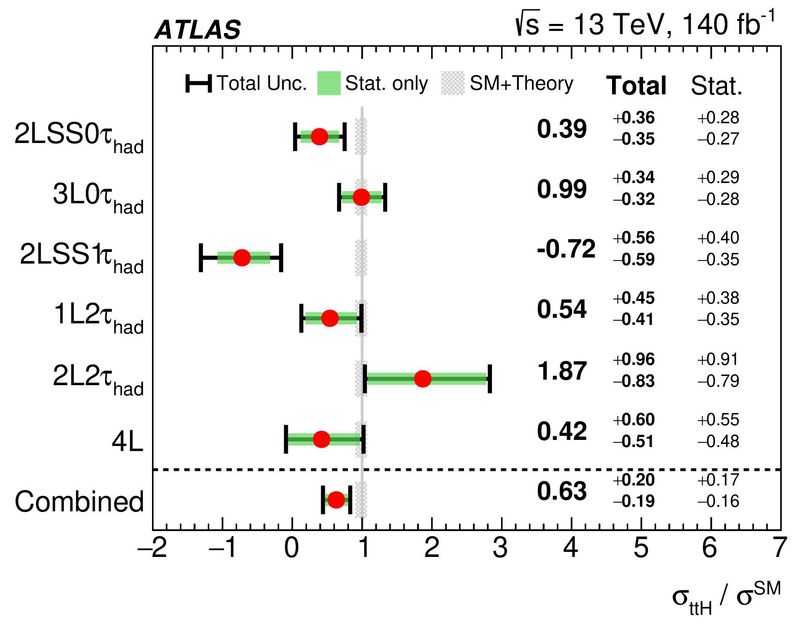
Main analyser
This analysis uses
Published: 14 January 2026 · Nature Communications 17, 541

Main analyser
This paper presents GN2, a transformer-based algorithm that identifies the flavour of jets directly from low-level tracking information, using physics-informed auxiliary training objectives. In collision data at a 70%
Published: 7 April 2025 · Physical Review Letters (PRL), Editor's Suggestion, Featured in Physics
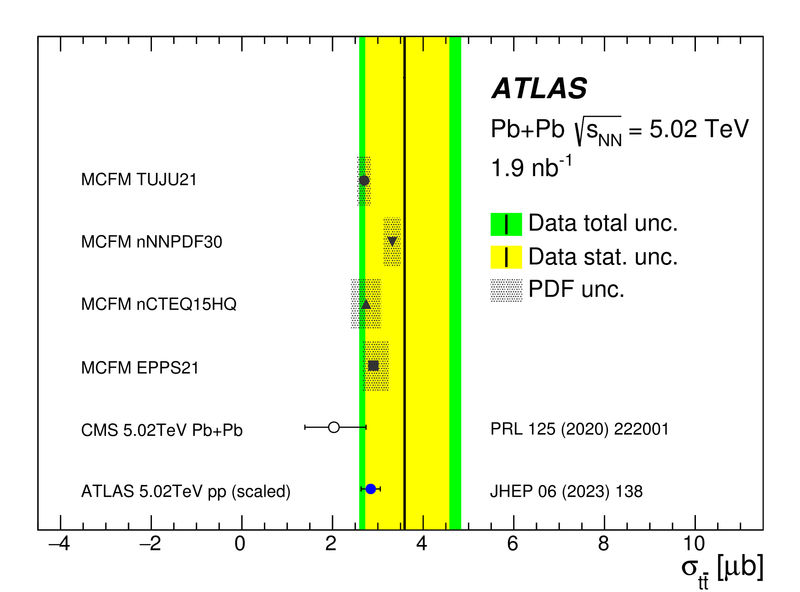
Main analyser
This Letter reports the first observation of top-quark pair production in lead–lead collisions, with a significance of 5.0
Published: 19 November 2024 · Journal of High Energy Physics (JHEP)
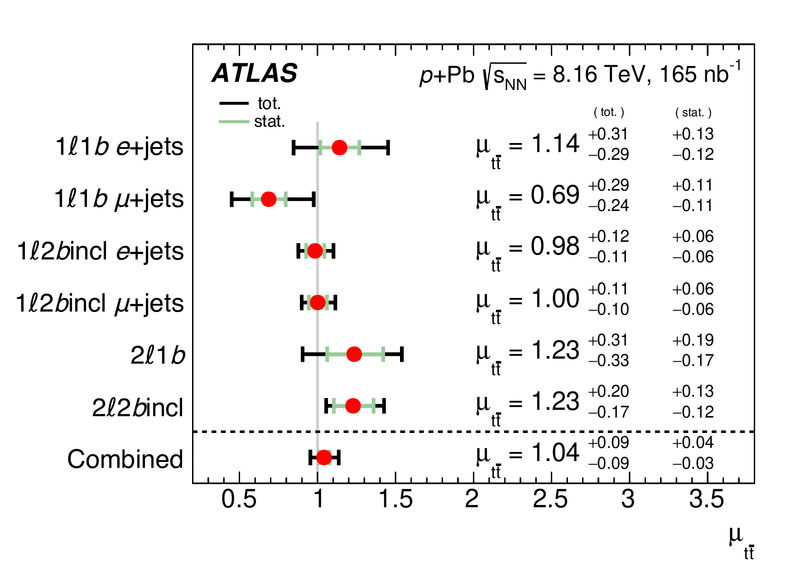
Main analyser
The top-quark pair production cross-section in proton–lead collisions was measured with a relative uncertainty of 9%, making this the most precise
Published: 31 July 2023 · The European Physical Journal C (EPJC)
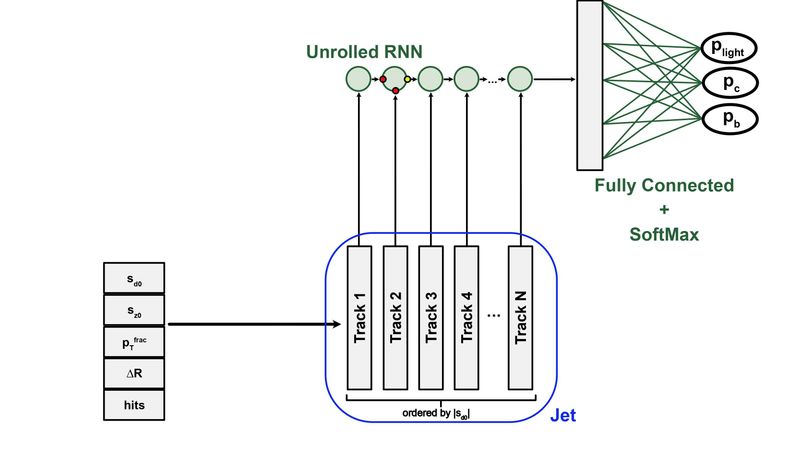
Contributed to the development of the pseudo‑continuous data‑based calibration
This paper documents the performance and the data-based calibration of the ATLAS flavour-tagging algorithms used for the full LHC Run 2 proton–proton collision dataset.
ATLAS-CONF-2026-006
Acta Phys. Pol. B Proc. Suppl. 18, 1-A32
PoS (ICHEP2024) 637
ATLAS-CONF-2023-063
PoS (ICHEP2020) 100
ATLAS-CONF-2019-045
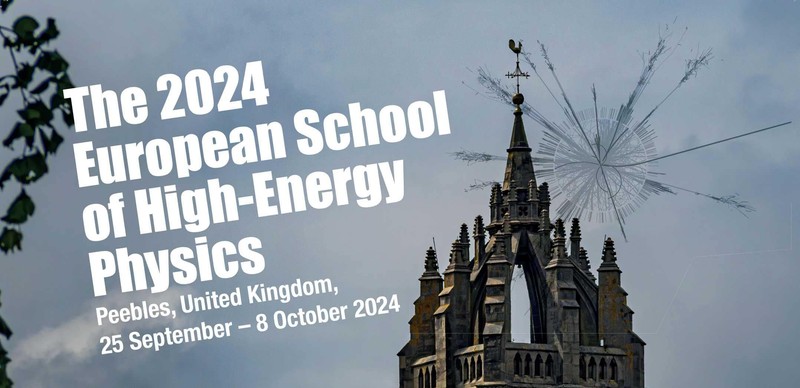
September 25 ‑ October 8, 2024
European School of High-Energy Physics (ESHEP 2024)Peebles, Scotland, UK
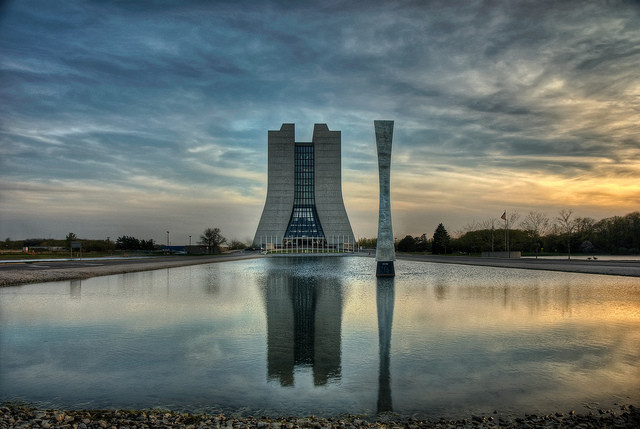

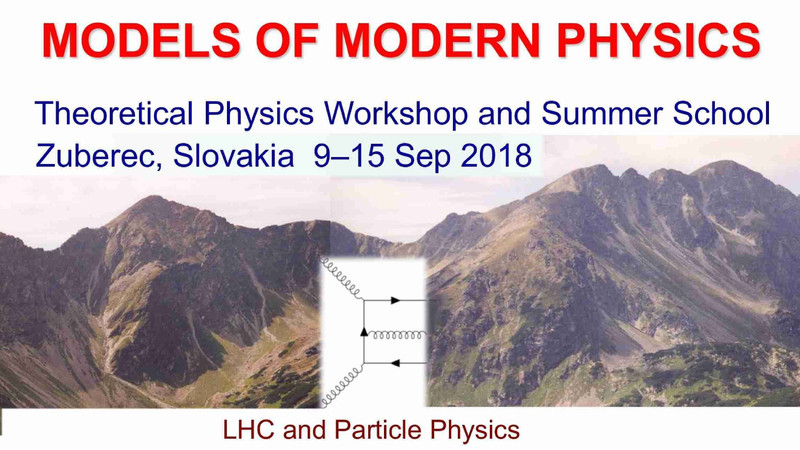
September 9 ‑ September 15, 2018
The 12th Models of Modern Physics Workshop and Summer School in Theoretical PhysicsZuberec, Slovakia